Author name: John Moriarty

John Moriarty is the founder of Nutrients PLUS®, a Virginia-based company that is a nationwide integrator of organic residuals (such as municipal biosolids) in providing fertilizer solutions with a primary focus on non-food crop sectors across the United States. John’s goal to reduce reliance on expensive and soluble ingredients, such as urea and phosphates, is by utilizing organic matter in proprietarily developed formulas to fertilize non-food crops–like turf. The turf and ornamental market is the fourth largest in acres and a major consumer of fertilizer products nationally. Under John’s leadership, Nutrients Plus® is a long-term sponsor of research at California Polytechnic State University, Old Dominion University and Virginia Tech and is committed to ongoing product innovation and development in the fertilizer industry. John serves as a consultant within the fertilizer industry to promote its mission to improve water quality and the environment by reducing over application of chemical fertilizers through sound, research-based programs and fertilizers formulated with natural ingredients. John has developed patented products, and holds degrees in agronomy from Virginia Tech, and in forestry from Paul Smith’s College. He is a member of the Virginia Tech Caldwell Society. He has been managing member of Nutrients PLUS® for over 20 years. He previously held executive and sales positions at Harmony Products, Summit Helicopters and Southern Lawn; respectively a fertilizer manufacturer, an aerial forest service company and a professional lawn care operator. He is active at his church, currently serves several ministries.

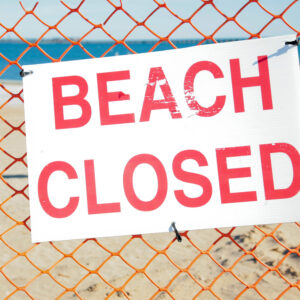
Beaches are being closed because of high levels of bacteria.

Beach Closures Are a Reminder: Waste Doesn’t Disappear

For most people, that story is about a ruined beach day.

For those of us who work with soil, nutrients, waste streams and land management, it points to something bigger.

Waste does not disappear. It moves. It gets treated. It gets discharged. It gets hauled. It gets spread. It gets washed. It enters another part of the system.

That is the part we cannot afford to ignore.

Beach Closures Are a Reminder: Waste Doesn’t Disappear Read Post »

Restore Summer-Stressed Turf with Clarus® PRO Screamin’ 8®

Summer can be one of the toughest seasons for turf. Heat stress, heavy traffic, disease pressure, drought, and construction projects often leave thin, damaged, or bare areas that need attention. While many turf managers wait until fall to think about recovery, September and October are the ideal months to begin planning and preparing for successful turf establishment.

Restore Summer-Stressed Turf with Clarus® PRO Screamin’ 8® Read Post »

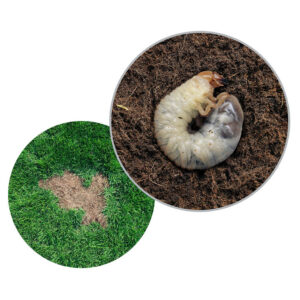
Grub example in soil and example of what happens to the grass.

Grubs Are a Turf Problem. Misdiagnosis Is a Business Problem.

Most turf problems do not need more noise. They need a clearer process.
White grubs can cause real damage, but they should be confirmed before they are treated. A fertility program should not be positioned as pest control, and a chemical application should not be used as a substitute for sound agronomic decision-making.
For professional landscapers, the best program is not the most aggressive one. It is the one that keeps turf healthy, identifies problems accurately, treats only when needed, and supports recovery after stress.

Grubs Are a Turf Problem. Misdiagnosis Is a Business Problem. Read Post »

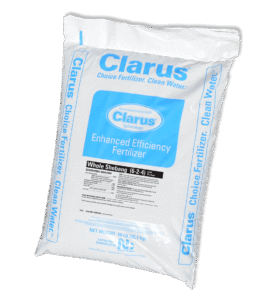
White 50lb bag of Clarus Whole Shebang 6-2-4

Act Now. Save Your Lawn And Wallet.

Get relief from pressures affecting urea-based fertilizer and protect your wallet.

For years, the standard guidance for cool-season turf has been simple, avoid fertilizing in the summer.

That recommendation was based on real risks:
– Excess nitrogen can increase disease pressure
– Rapid growth can stress turf in heat

But the issue isn’t fertilization. It’s how and what you apply.

A properly designed, low-nitrogen fertilizer program allows you to maintain turf health through summer without increasing risk.

Act Now. Save Your Lawn And Wallet. Read Post »

Florida turf at resort

Fertilizing Before the Cutoff: How Florida Landscapers Should Prepare Turf Ahead of June 1st

In many parts of Florida, June 1 marks the beginning of seasonal fertilizer restrictions tied to the summer rainy season. For professional landscapers, that date isn’t just a regulatory checkpoint—it’s a planning deadline.

What happens before June 1 plays a major role in how turf performs through the most challenging months of the year.

Fertilizing Before the Cutoff: How Florida Landscapers Should Prepare Turf Ahead of June 1st Read Post »

More organic is represented by a green arrow going up. Less salt is represented by a blue arrow pointing down.

More Organic Matter = Less Salt

When evaluating turf fertilizers, many assume that higher NPK numbers—like 28-5-12—deliver better results. But higher analysis doesn’t always mean better performance. In fact, it often means higher salt content. A more effective approach focuses on nutrient efficiency, not just concentration. High NPK Fertilizers vs. Organic Matter-Based Fertilizers Traditional high-nitrogen fertilizers rely on concentrated synthetic salts

More Organic Matter = Less Salt Read Post »

Scroll to Top