Professional turf managers do not have the luxury of choosing products based on a good environmental story alone.
The product still has to perform.
Lawns need consistent color. Turf needs to recover from stress. Crews need products that deliver reliably. Customers expect results. And every additional service call, corrective application or inconsistent property puts pressure on labor and margins.
That is why the future of organic matter in professional turf management is not simply about using more of it.
It is about knowing
- how much to use,
- why you are using it and
- what you can expect it to contribute.
That is the thinking behind POMAR (Prescribed Organic Matter Application Requirement).
Organic Matter Needs a Prescription
Professional turf management has long been built around measurable nutrient inputs.
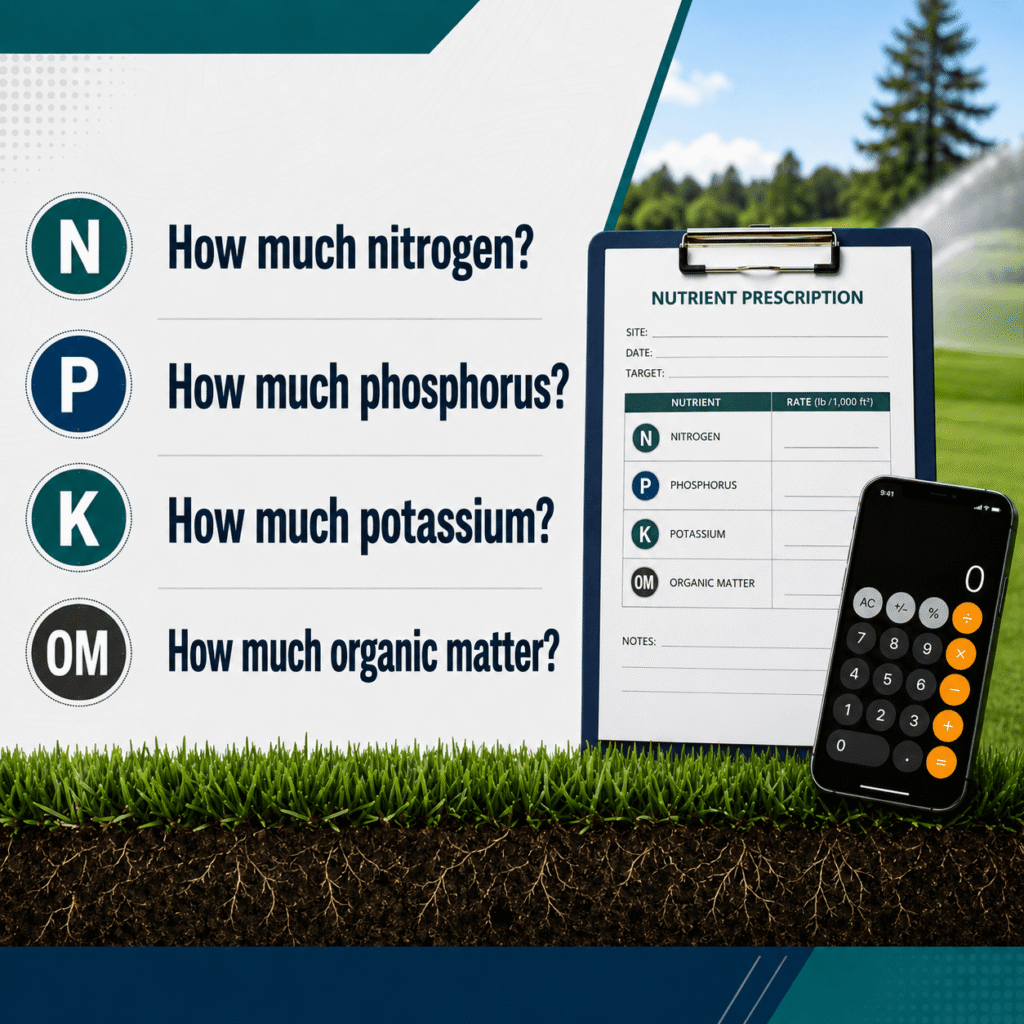
How many pounds of nitrogen should be applied?
How much phosphorus or potassium does the turf require?
What rate is appropriate for the property, soil deficiencies, grass type and time of year?
Those questions make N, P and K manageable because professionals can calculate them, prescribe them and build fertility strategies around them.
Organic matter has rarely been treated with the same precision.
It is often discussed broadly as something that is simply “good for the soil.” That may be true, but story telling is not enough for a professional responsible for hundreds or thousands of acres of managed turf.
Clarus® takes a different approach.
POMAR treats organic matter as another measurable input within the fertility strategy. Instead of only asking how many pounds of nitrogen are being applied, turf managers can begin asking how many pounds of organic matter are being delivered as well.
The Clarus® Calculator was developed to help professionals incorporate that measurement into customized turf programs.
In other words: Clarus® makes organic matter measurable, prescriptive, and predictable for professional turf management.
Moving Beyond the “Organic vs. Synthetic” Debate
The industry has spent years separating fertilizers into categories such as organic and synthetic.
For professional turf managers, that distinction can oversimplify the real question.
The better question is: What combination of ingredients will give the turf the nutrients, organic matter and performance it needs?
Nutrients PLUS® sources natural ingredients containing organic matter and combines them with traditional fertilizer ingredients to create products designed to work together prescriptively. Its research proven approach focuses on integrating those materials into fertilizer formulations that can move through the existing professional turf supply chain.
That changes the role of organic matter.
It is no longer an alternative to conventional fertility.
It becomes part of a fertility strategy.
The Clarus® approach allows turf managers to consider nitrogen, phosphorus, potassium and organic matter TOGETHER rather than viewing organic matter as an unrelated soil amendment.
Organic matter does not amend though. As a fertilizer supplement, some of its components improve soil quality. Other substances are adsorbed by plants directly. This makes a more complete and total, effective package. It’s more than a fertilizer – it’s an enhanced efficiency bio-fertilizer.
From Waste Stream to Standardized Ingredient
There is another important part of this story.
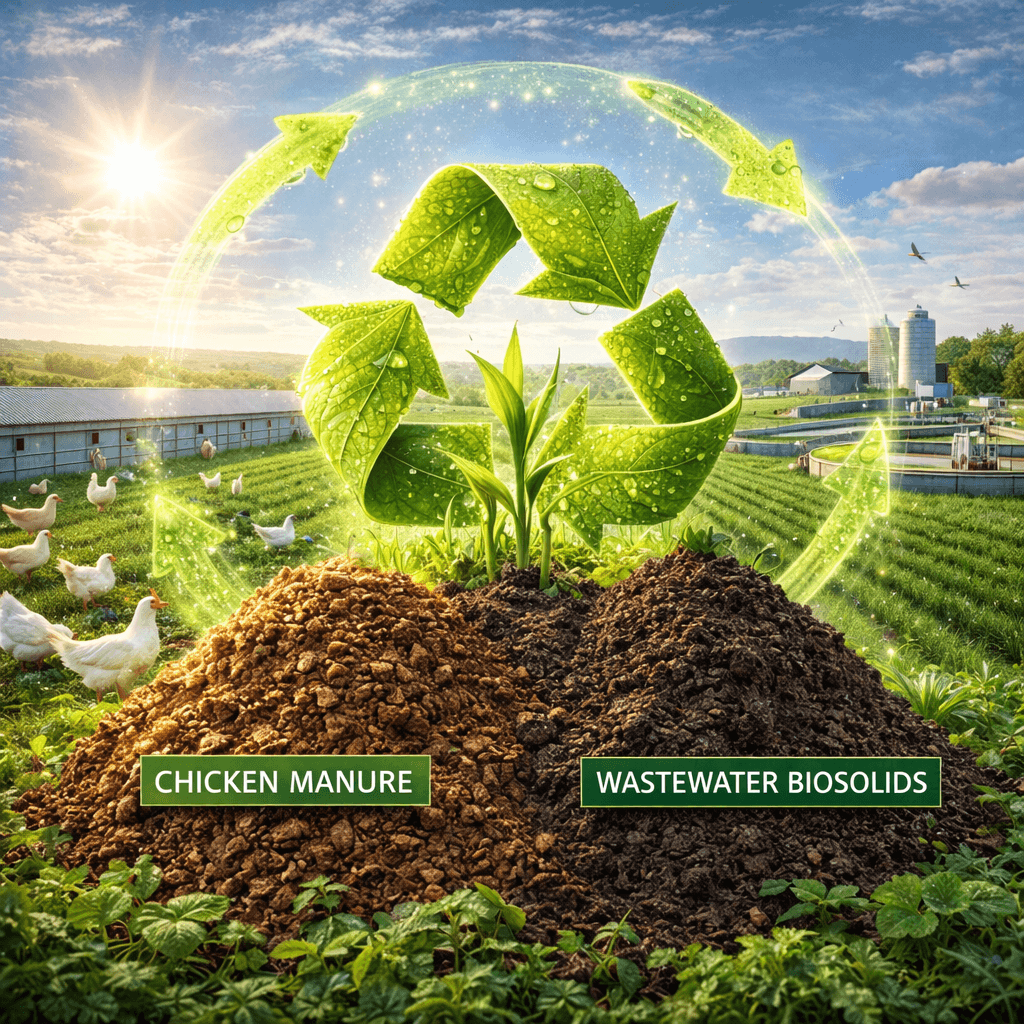
Some of the natural nutrient sources used by Nutrients PLUS® begin as materials society has to manage, including poultry manure and municipal wastewater residuals.
Simply finding another place to put those materials is not enough.
For recovery to become a meaningful, long-term solution, those materials need to be processed and converted into useful, consistent ingredients.
That is where the Nutrients PLUS® model becomes different.
Nutrients PLUS® system turns waste disposal challenges into standardized fertilizer ingredients that power predictable Clarus® turf products.
Its research and production platform is built around converting recovered nutrient sources from communities nationwide into fertilizer ingredients, blending them with other nutrient sources and producing premium fertilizers suitable for professional applications. Nutrients PLUS® has also developed its Clarus Quality, or CQ, standards as part of its approach to processing recovered materials.
The environmental benefit is important. But it is not the finish line.
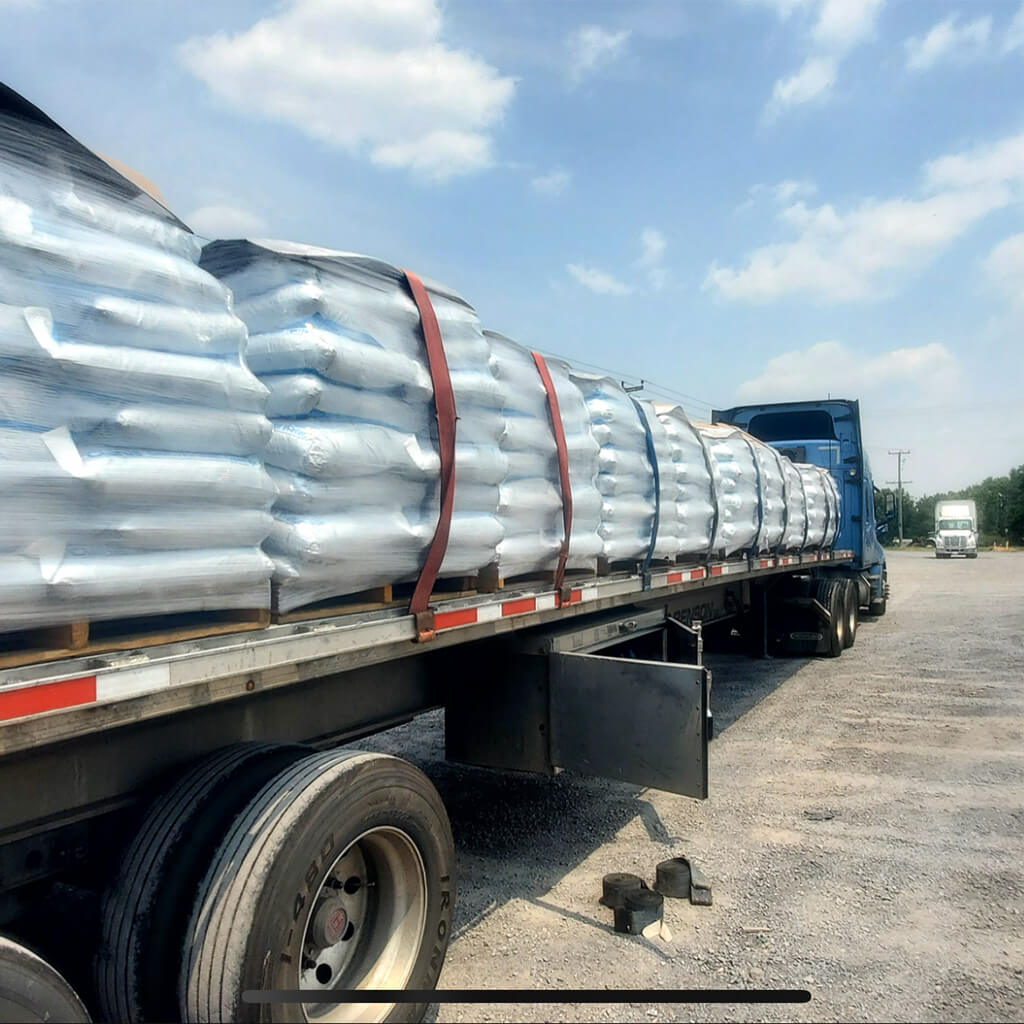
The Product Still Has to Earn Its Place on the Truck
Professional landscapers make purchasing decisions differently than consumers.
A product may have an interesting origin story, but if it creates inconsistent results, complicates operations or causes customers to question the appearance of their properties, it will not remain part of the fertility strategy for long.
For landscapers, predictability matters because predictability affects the entire operation.
A fertilizer needs to support:
- Consistent turf response across properties
- Reliable application planning
- Efficient use of nutrients
- Fewer unexpected corrective treatments
- Confidence that crews can produce repeatable results
That leads to one of the most important principles behind the Nutrients PLUS®, Clarus® model:
Waste recovery only becomes scalable when the finished product performs well enough for professionals to choose it repeatedly.
The goal cannot simply be to divert a material from a waste stream once. The recovered material has to become part of a product professionals want to purchase again.
And again.
That repeat demand (two decades in the case of the Clarus® brand) is what turns recovery into a functioning system. Every landscaper can have a part in that system.
Measure Organic Matter Alongside N, P and K
The Clarus® turf approach demonstrates how that system can work in practice.
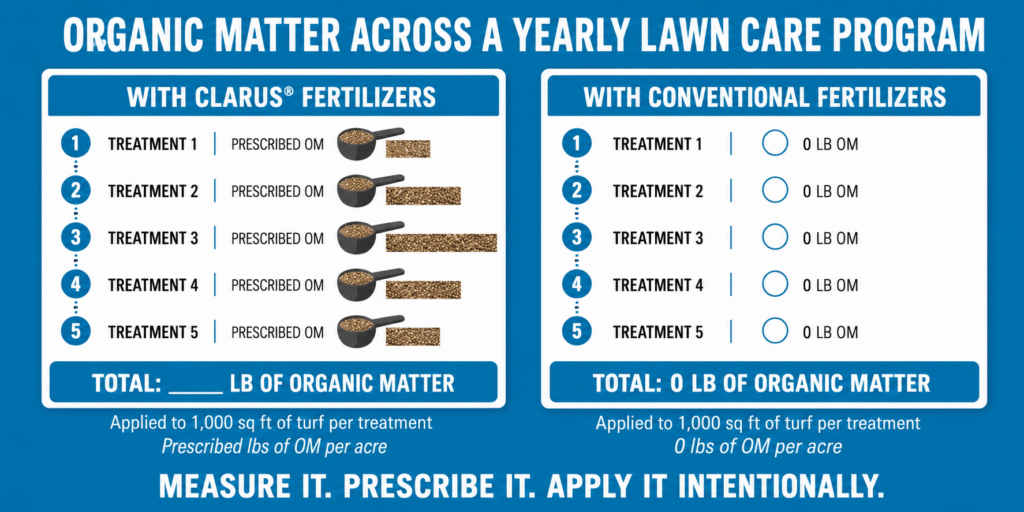
On its turf program comparisons, Clarus® encourages professionals to consider not only the pounds of nutrients being applied but also the pounds of organic matter delivered throughout the season.
The company positions organic matter as part of the nutrient-management equation and provides the Clarus® Calculator to help turf managers design customized applications.
This creates a more useful conversation than simply asking whether a fertilizer is “organic.”
Instead, the turf manager can ask:
How much organic matter am I actually applying?
How does it fit with the nitrogen being applied?
What does the soil require throughout the season?
Where can I use organic matter strategically to support soil biology and turf performance?
And how can I create a fertility approach that is repeatable from property to property?
Those are management questions. And professional landscapers need management tools, not vague promises.
Predictable Performance Makes Recovery Sustainable
There is an important distinction between disposing of waste and creating value from it.
Disposal moves a problem.
Recovery creates a usable resource.
But the strongest model goes one step further: it creates a resource with enough measurable value that customers actively demand it.
That is what connects the Nutrients PLUS® mission to the Clarus® product strategy. Recovered nutrient sources become standardized fertilizer ingredients.
Those ingredients become predictable turf products.
Those products give professional landscapers another tool for managing nutrient inputs, organic matter and turf performance. And continued professional demand helps create an economically sustainable destination for recovered materials.
That is a much larger story than organic fertilizer. This story is about innovation, consumer choices, a free market and accomplished without support from grants or government subsidies.
It is a system in which environmental recovery and professional turf performance support one another.
Put Organic Matter on the Prescription
For decades, professional turf managers have calculated nitrogen because predictable results require a known rate.
POMAR applies that same discipline to organic matter.
Measure it.
Prescribe it.
Apply it intentionally.
Then evaluate the results.
Because when organic matter becomes a measurable part of fertility rather than a vague product attribute, professional landscapers can make better-informed decisions about where and how to use it.
And when recovered materials can consistently contribute to products professionals choose based on performance, waste recovery becomes more than an environmental objective.
It becomes a scalable business model.
That is the Clarus® choice: turning organic matter into a predictable part of professional turf management while creating productive new uses for nutrients, that would otherwise remain a waste-management challenge.