Is there no end in sight? This article reminded me again, why we add to the solution and not the problem. It’s Water Quality Month, and it’s about time, literally.
A recent Fox Weather article reported beach warnings and closures from coast to coast, with elevated levels of enterococcus and E. coli disrupting summer plans in places from Los Angeles to New York, Florida, New Jersey, Michigan and Washington.
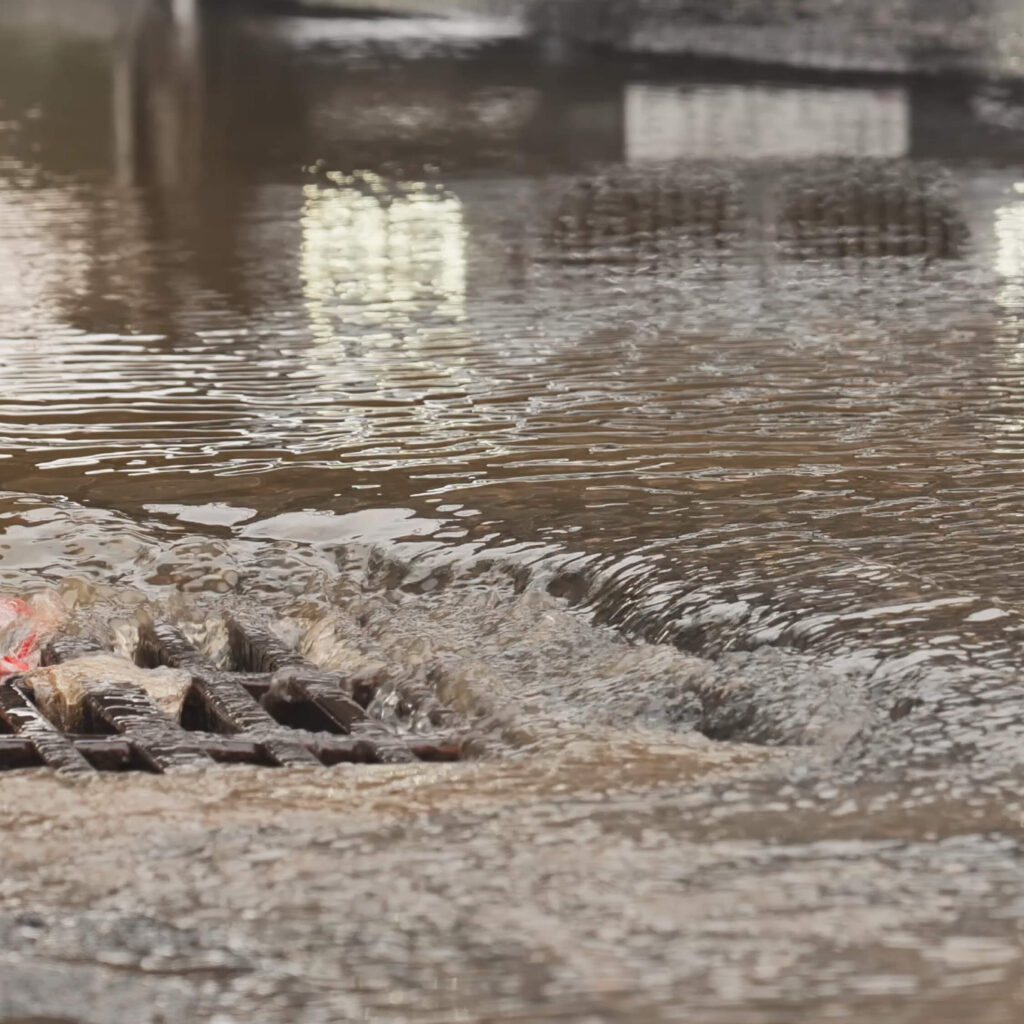
The article pointed to a familiar pattern: after heavy rain, stormwater can carry sewage, pet waste and other contaminants into rivers, lakes and coastal waters.
For most people, that story is about a ruined beach day.
For those of us who work with soil, nutrients, waste streams and land management, it points to something bigger.
Waste does not disappear. It moves. It gets treated. It gets discharged. It gets hauled. It gets spread. It gets washed.
It enters another part of the system.
That is the part we cannot afford to ignore.
The Real Issue Is the Cycle
Beach closures caused by bacteria are not a fertilizer story by themselves. Enterococcus and E. coli are indicators of fecal contamination, not fertilizer contamination. But they are part of the same larger reality: what happens upstream eventually moves downstream.
The EPA notes that fecal contamination at swimming beaches can come from: malfunctioning sewage treatment plants, combined sewer discharges, septic systems, recreational boat sewage, rainwater runoff carrying pet and animal waste, and high swimmer counts.
That distinction matters.
Nitrogen and phosphorus do not directly cause E. coli or enterococcus readings. But they are part of the same larger conversation about how human and animal waste, stormwater, land use and nutrient movement affect water quality.
When too much nitrogen and phosphorus enter water, they can fuel algae and cyanobacteria faster than ecosystems can handle, reducing water quality and oxygen levels and creating conditions that harm aquatic life.
The question is this: How do we manage nutrients and organic residuals before they become part of a larger downstream problem?
This is the technology where Nutrients PLUS® has a role, through Clarus® fertilizer products.
The Scale Is Bigger Than Most People Realize
Across the United States, approximately 16,000 municipal wastewater treatment facilities operate nationwide and serve more than 75 percent of the population, according to the EPA.
That infrastructure is a public health achievement. It helps keep communities functioning every second of every day.
And there are even fewer (less than 1% of the 16,000) that have invested in an additional, extrodinary step in their process. These are the facilities we want for communities in the future.
This is because, treatment does not mean disappearance.
Wastewater treatment creates residuals. Animal agriculture creates manure. Communities create organic waste. Landscapes require nutrients. Soil needs organic matter.
The challenge is how those materials are managed.
The United States had an estimated population of 341,784,857 as of July 1, 2025, according to the U.S. Census Bureau. The world population has also crossed the 8 billion mark, with the Census Bureau and United Nations using different estimated dates but pointing to the same global scale.
More people means more pressure on wastewater systems, stormwater systems, food production, landfills, farms and landscapes.
That pressure will not solve itself.

The Equation Keeps Moving
One way to look at this is as an equation.
On one side, we have the inputs: population growth, wastewater, animal waste, stormwater, fertilizer runoff, hard surfaces, aging infrastructure and more frequent heavy rain events.
On the other side, we have the environment receiving those inputs: soil, streams, rivers, lakes, bays and beaches.
For a time, the system can absorb a certain amount of pressure. Treatment plants process waste. Soil filters water. Turf holds ground in place. Wetlands and waterways do part of the work.
But every system has limits.
If the same inputs keep increasing, the equation starts to shift. What once seemed manageable can become harder to balance. What once happened occasionally can happen more often. What once felt like a local issue can start showing up in more places at the same time.
That is the warning sign – the proverbial “canary in the coal mine”
The goal is not to wait until the equation tips too far in the wrong direction. The goal is to change the inputs before that happens.
That means treating organic residuals as resources when they can be responsibly reused.
It means keeping nutrients in the productive cycle. It means applying fertilizer with purpose, instead of excess.
It means building soil health so landscapes can do more of the work they are meant to do.
For Nutrients PLUS®, that is where stewardship becomes practical through Clarus® products. We are not trying to remove people, agriculture or landscapes from the equation. We are working to manage the equation better.
From Waste Stream to Resource
At Nutrients PLUS®, stewardship starts with a plainspoken idea: if a material still has value, we should not treat it like the end of the line.
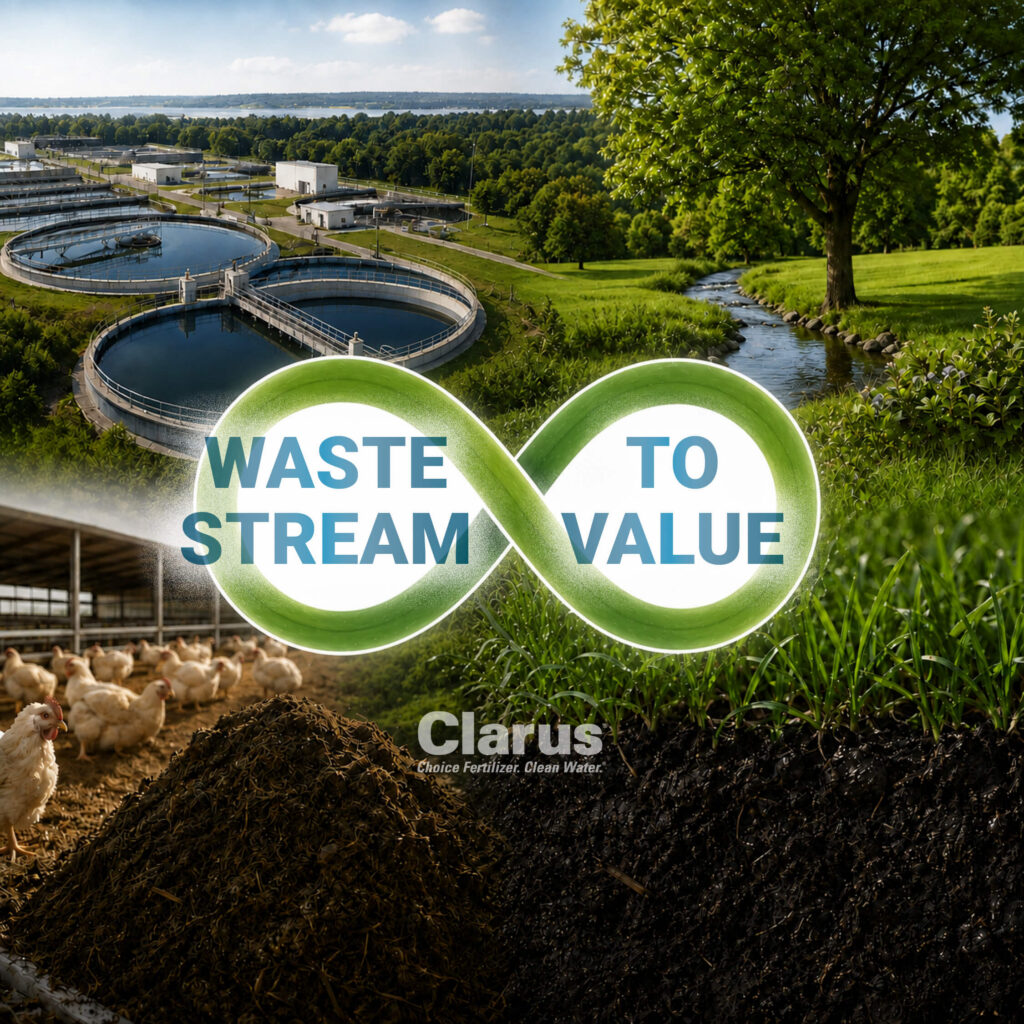
With Nutrients PLUS®, organic residuals, including treated biosolids and poultry manure, are converted into usable fertilizer resources. When biosolids meet the EPA’s highest standards for pollutant limits, pathogen reduction and vector attraction reduction, they may qualify as Class A Exceptional Quality, or EQ.
We met and go beyond EQ, with CQ, or Clarus® Quality
CQ keeps public safety at the center while also considering the practical details that matter in the field, including dust, odor and particle uniformity.
Metals and other perameters are monitored and kept within applicable limits. Some elements, such as iron and zinc, can also support soil fertility when present at appropriate levels.
That is the difference between reuse and responsible reuse.
Instead of treating organic residuals only as something to dispose of, Clarus® fertilizer products help return nutrients to productive use in the soil, at the right rate, for the right purpose.
Beach closures are a warning sign. They remind us that what happens upstream eventually shows up downstream.
At Nutrients PLUS®, we believe the better answer is not to pretend waste disappears. It is to manage nutrients with purpose, conserve the resources already in the system, preserve water, and help communities continue the cycle in a more responsible way.
This is the story behind our legendary and purposeful product Screamin’ Green®.